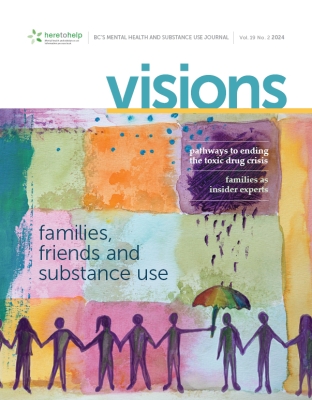
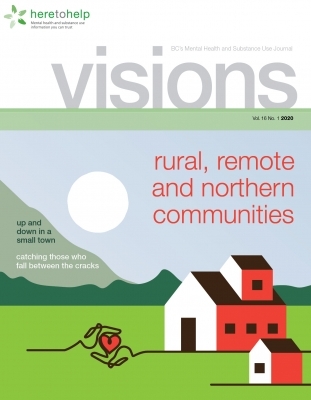
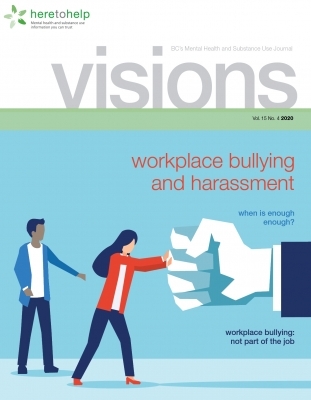
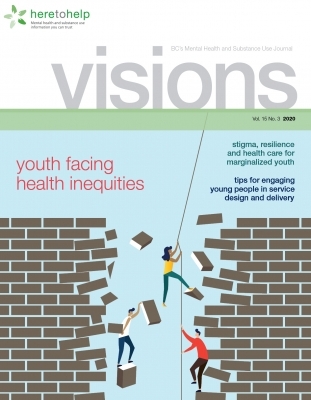
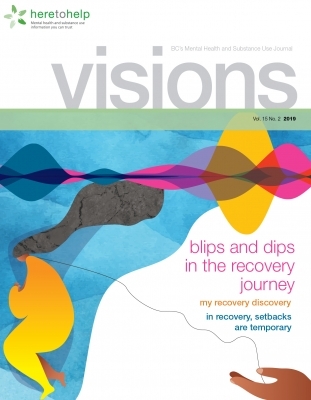
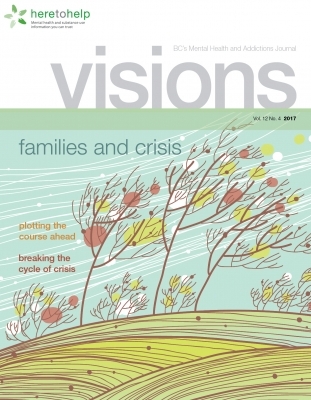
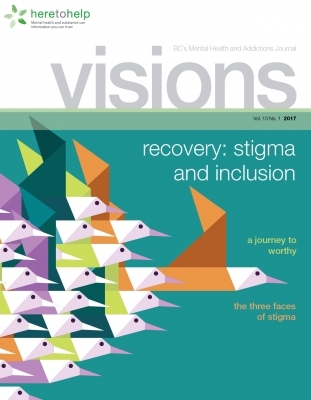
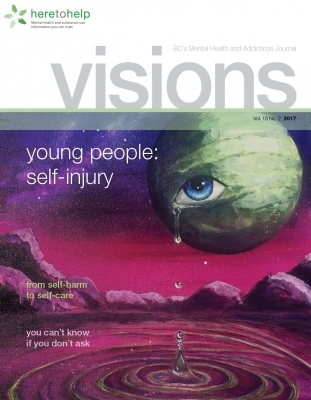
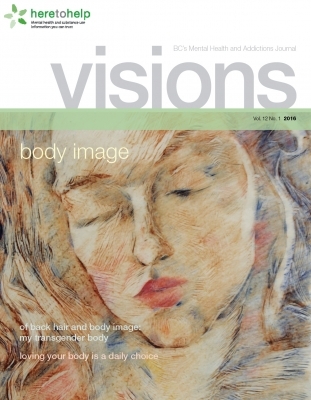
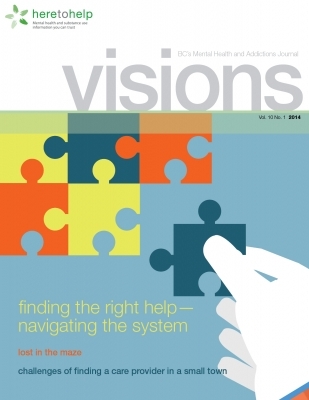
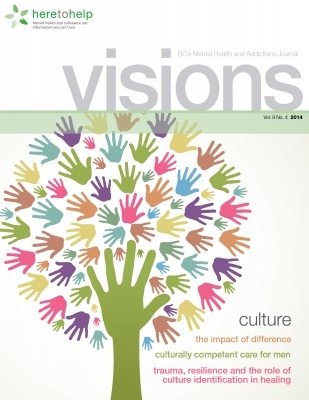
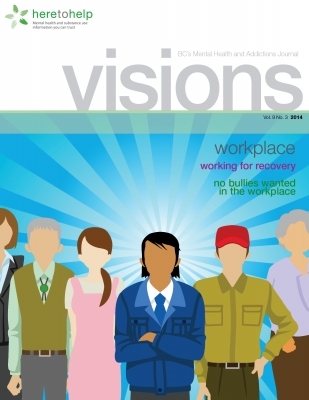
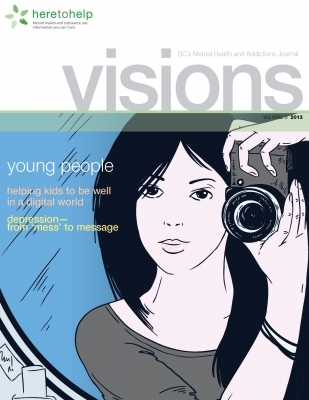
Visions: BC's Mental Health and Addictions Journal

Published quarterly, Visions is an award-winning magazine which provides a place where many views on mental health and substance use issues can be heard.

The journal is written by and for people who have used mental health or addictions services, service providers, family and friends, community advocates, and leaders and decision-makers.

Print subscriptions are free if you are in one of the groups just described and you or your organization is based in BC; otherwise, subscriptions are $25 (Cdn) for four issues or $7 apiece. Electronic subscriptions, through our new service called eVisions, are free to anyone. Sign up in the "sign up for eVisions" box on the right hand side of this web page.

If you would like to reproduce, adapt or distribute Visions articles, please consult our Copyright and Terms of Use policy; the limits of our information are described in our Disclaimer.


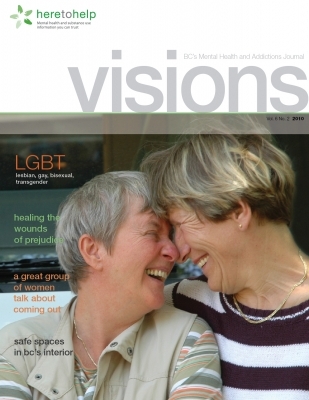
LGBT - Lesbian, Gay, Bisexual, Transgender

 Vol. 6, No. 2 (2010) | 36 pages | table of contents | pdf (3.2 Mb)

LGBT (lesbian, gay, bisexual and transgender) people often face prejudice, discrimination and isolation. Now imagine the doubly stigmatizing effect of being LGBT and having a mental illness or substance use problem. These added stresses can lead, in part, to higher rates of mental health and substance use problems. But how do you talk about sexual orientation or gender with your service provider?  What happens when your service provider says that your sexual orientation or gender identity are the cause of your mental health problems? Through the words of our passionate and courageous writers, learn how others found wellness and resilience through supportive and loving families, spirituality and knowledgeable service providers. Join us as we explore the relationships between sexual orientation, gender identity, mental health and substance use.


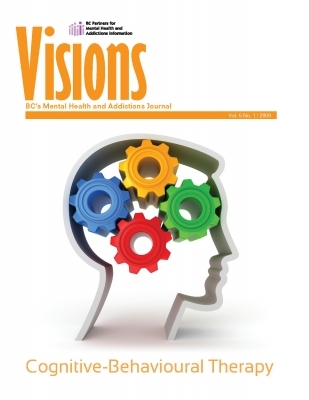
Cognitive-Behavioural Therapy

Vol. 6, No. 1 (2009) | 32 pages | table of contents | pdf (2.1 Mb)

Cognitive-behavioural therapy, or CBT, is a type of talk therapy that helps you understand the relationship between your thoughts, behaviours and feelings. It’s the leading type of therapy for many mental health and substance use issues, including depression, anxiety, psychosis and problem substance use. This issue of Visions explores the history of CBT, current CBT practices and different approaches to treatment for different groups of people. You’ll learn how CBT works and you’ll see how CBT has helped people with different mental health problems.  As you read this issue, you may notice a distinct theme in many articles: despite the successes of CBT, it can be very hard to access this treatment in BC. We hope that this issue of Visions brings the problem of access to light and encourages you to learn more about this effective therapy.


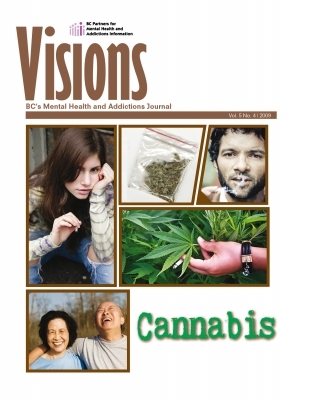
Cannabis

 Vol. 5, No. 4 (2009) | 32 pages | table of contents | pdf (2.5 Mb)

This issue of Visions examines the controversial role of cannabis in society, both on its own as a substance and in the broader context of mental health. You will read many different perspectives on cannabis use and supporting research that present a more complex view of cannabis than the black and white extremes. You will hear the experiences of people who have found solace in the healing properties of cannabis, and of those who have found cannabis detrimental to their mental and physical health. This issue of Visions may lead you to question your own attitudes and assumptions, and you'll likely learn something new along the way.


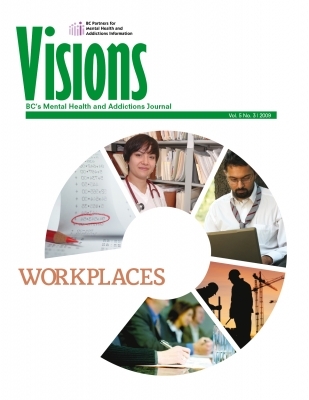
Workplaces

Vol. 5, No. 3 (2009) | 32 pages | table of contents | pdf (1.7 Mb)

This issue of Visions explores mental illness in the workplace. You'll hear rational arguments as to why employers, managers, unions and employers should care. Stats will show how inaction can impact the bottom line, highlight legal responsibilities and demonstrate how small accommodations to help someone succeed in the workplace are cheaper and easier than hiring and training a new employee. But you'll also hear stories of compassion, the personal experiences of employees and employers, that show helping someone goes beyond the bottom line.


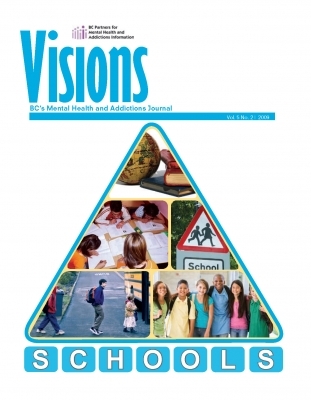
 Schools

Vol. 5, No. 2 (2009) | 32 pages | table of contents | pdf (1.8 Mb)

Mental health problems among elementary and high school students are much more common than many believe, and use of alcohol and other drugs by teenagers has its own misconceptions. No classroom is immune to these issues. Add to this the lenses of culture, gender, age, and geography. Since teachers see kids regularly they are in a unique position to be able to notice the first sign of changes in kids' academic, social and emotional development. The focus of this issue is not only teachers, but also what the school, as a whole can do to help young children.
 

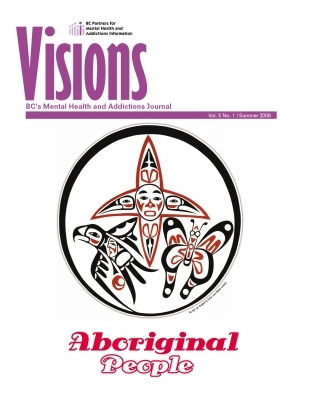
Aboriginal People

Vol. 5, No. 1 (Summer 2008) | 32 pages | table of contents | pdf (1.9 Mb)

This issue of Visions stirs new ground like no other issue has. If you identify yourself as Aboriginal, First Nation, Inuit or Metis, you will likely find much that resonates with you. If you don't indentify yourself that way, you will still learn a lot from this issue about the role of identity, culture, empowerment and community. Our amazing contributors have weaved mental well-being and wellness into a complex tapestry with spiritual, phsycial and social well-being, as well as the historical unjustices and current realities faced by many Aboriginal people including family violence and abuse, child neglect, trauma, discrimination, poverty, and homelessness.


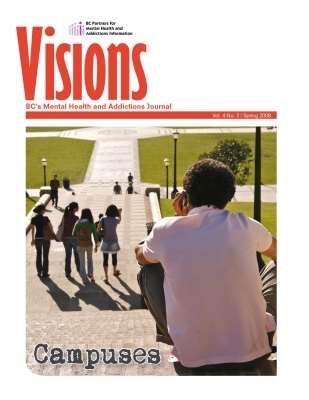
Campuses

Vol. 4, No. 3 (Spring 2008) | 36 pages | table of contents | pdf (1.7 Mb)

This issue of Visions probes beyond the sunny surface of campus life to examine some of the underlying mental health and substance use issues facing post-secondary students, practitioners and administrators. Family members, students, counsellors and other campus professionals share insights into sources of student stress, substance use and the state of student mental health on various BC campuses. They also highlight outreach initiatives and innovative programs for students. You will also hear from students who struggled to make the grade, triumphed over adversity, and some of whom succeeded in creating change on their campus.


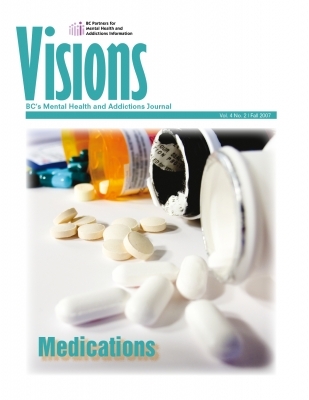
Medications

Vol. 4, No. 2 (Fall 2007) | 36 pages | table of contents | pdf ( 2.0 Mb)

Medications are often a double-edged sword. They can lift symptoms of mental illness or addiction so that people can feel well enough to do all the other hard work needed for recovery. But, they also present a host of complex challenges from side effects and interactions, to affordability and access. This issue of Visions aims to help consumers feel more like partners in their care and tries to present a helpful guide into the complex world of pharmaceutical treatment of mental or substance use disorders.


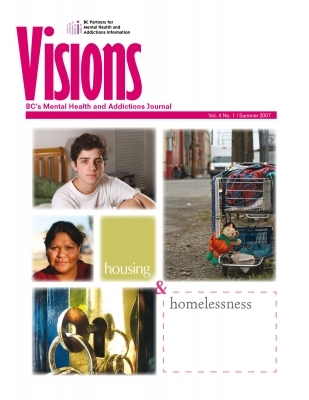
Housing and Homelessness

Vol. 4, No. 1 (Summer 2007) | 40 pages | table of contents | pdf (1.7 Mb)

This milestone issue of Visions navigates through the intricate web of housing and homelessness. You’ll come to realize just how deeply entrenched mental illness and addiction are in BC’s homelessness landscape. This issue is full of heartbreaking, frustrating and uplifting personal stories from people who have lived or are still living on the streets; and from the compassionate souls who are trying to help them. You’ll be inspired by profiles of innovative programs that are removing barriers to housing for those who need it most.


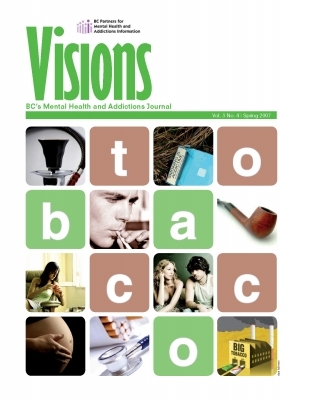
Tobacco

Vol. 3, No. 4 (Spring 2007) | 36 pages | table of contents | pdf (2.1 Mb)

While smoking is known to cause death and disease, what may be lesser known is the degree to which it affects the lives of people with mental illness and addictions, who are overrepresented in the smoking population. This issue of Visions on Tobacco explores the many facets of this legal substance and the people who use it—myths and facts, social and economic pressures, impacts of smoking policies, research and experiences into why so many mental health and addictions service users smoke, and unique programs and approaches that can help smokers to quit or cut down.


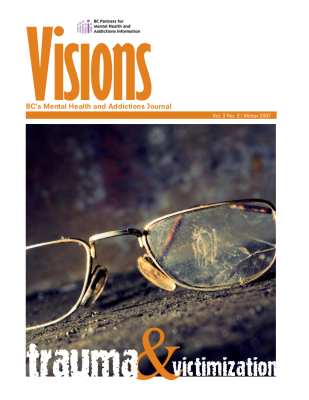
Trauma and Victimization

Vol. 3, No. 3 (Winter 2007) | 36 pages | table of contents | pdf (1.6 Mb)

The relationship between traumatizing events—including being a victim of crime—and mental health/illness is complex. The latest issue of Visions Journal on Trauma and Victimization looks at some of these complexities as well as the effects of trauma, treatment and support options, a sub-focus on post-traumatic stress disorder, and how to respond sensitively to certain populations.


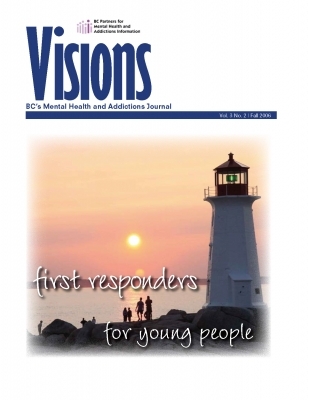
First Responders for Young People

Vol. 3, No. 2 (Fall 2006) | 36 pages | table of contents | pdf (1.7 Mb)

The common saying that "it takes a village to raise a child" rings true as this issue looks at first responders. Parents, school counsellor, teacher, police, firemen, friend, coaches and other members of our society must work together to support children and their families as young people grow up. Articles in this issue looks into the prevention and intervention programs, a guide for parents on teen's alcohol and drug use, creative ways to reach out to youth such as aboriginal superhero comic.


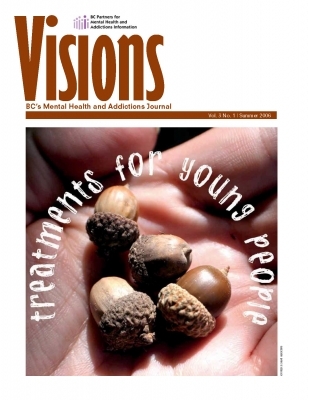
Treatments for Young People

Vol. 3, No. 1 (Summer 2006) | 36 pages | table of contents | pdf (2.0 Mb)

This edition of Visions focuses on young people. Articles in this issue looks into the issues faced by young people and what kind of treatments and support available for them. The issue is ranging from eating disorder and schizophrenia to pregnancy and youth parenting. Various treatment options for young people such as play therapy, diaelectical behavioural therapy, and music therapy are also discussed without forgetting the different support and skill-building for young people.


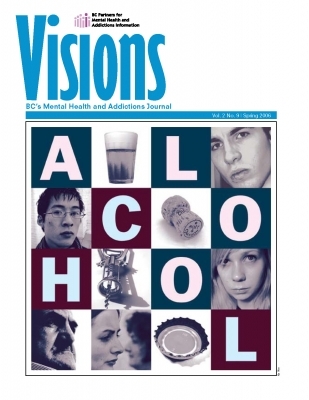
Alcohol

Vol. 2, No. 9 (Spring 2006) | 40 pages | table of contents | pdf (1.2 Mb)

Alcohol is one of our society's most accepted drugs, and yet its influences can be devastating. This edition of Visions looks at alcohol use and its personal, social and economic impacts and its effects on mental and physical health. Articles in this issue explore safe drinking guidelines, the link between alcohol and anxiety, nutrition solutions, women and alcohol use, pregnancy and fetal alcohol spectrum disorder, and the way we talk about alcohol. Different intervention strategies are discussed, and programs dealing with alcohol abuse throughout the BC are described.


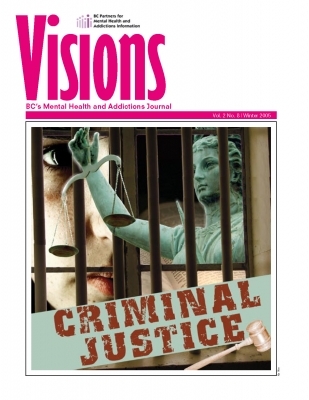
Criminal Justice

Vol. 2, No. 8 (Winter 2005) | 40 pages | table of contents | pdf (1.5 Mb)

This edition explores the intricate relationship between criminal justice and mental illness and addictions. Issues surrounding available treatment for disorders in prisons, stereotypes in the media, criminalization of individuals, surviving after prison release, mental health court, integration with the community, street crime, advocacy in the court systems, forensic psychiatric settings, and more. First-hand experiences and perspectives of the criminal justice system in BC are also shared.


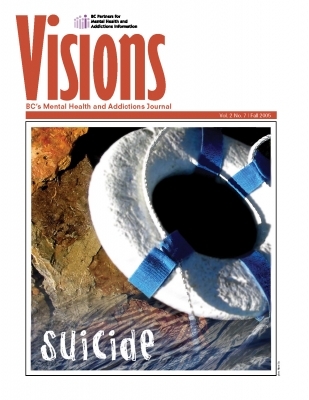
Suicide

Vol. 2, No. 7 (Fall 2005) | 40 pages | table of contents | pdf (1.5 Mb)

This issue looks at the difficult and complex issue of suicide and suicide prevention and relationships to mental illness and addictions. Topics explored include vulnerable groups, response guidelines, emerging national prevention strategies, attention to age and culture, self-harm, genetic/biological influences, and family involvement perspectives. As always, personal stories, approaches and resources are also featured.


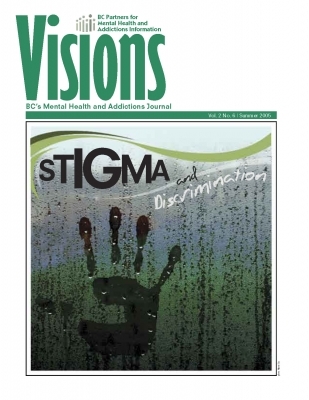
Stigma and Discrimination

Vol. 2, No. 6 (Summer 2005) | 40 pages | table of contents | pdf (1.6 Mb)

The articles in this edition of Visions talk of the many forms stigma take—societal, interpersonal, internal. As readers of this issue, we are already likely aware of the negative, often destructive impact of stigma on the lives of persons with mental illness and/or addictions. Stigma will only cease to exist when people are valued for who they are. This issue takes a deeper look at first-hand experiences of living with stigma.


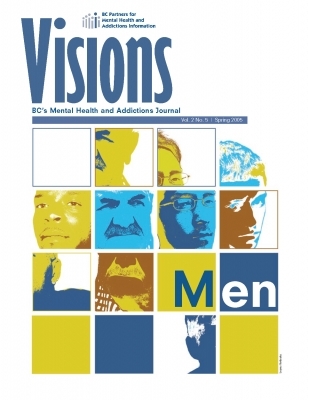
Men

Vol. 2, No. 5 (Spring 2005) | 40 pages | table of contents | pdf (2 Mb)

This issue looks at men's and boy's mental health. Although there are arguments that all mental health services and research are implicitly based on men, but if a gender lens reveals inequities for women then it also has the ability to reveal areas of concern for men. In this volume, read about the challenges of fatherhood, suicide risk factors at various ages, and 'drive for muscularity.'


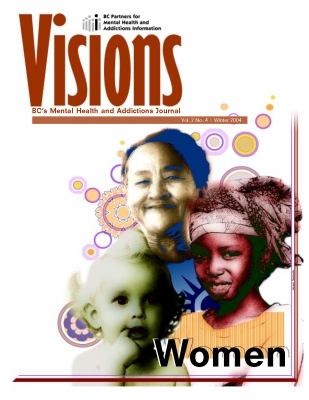
Women

Vol. 2, No. 4 (Winter 2004) | 48 pages | table of contents | pdf(1.2 Mb)

This new look issue of Visions is dedicated to women's mental health and addictions matters, including eating disorders, mothering, rural issues, benzodiazepines and workplaces. Looking through a gender prism will show some very unexpected facets of mental illness and addictions, such as the consequences of violence against women in rural context or ethnic and cultural aspects of substance abuse.


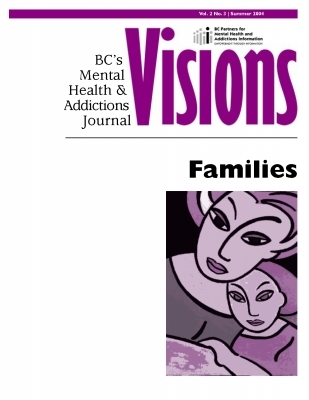
Families

Vol. 2, No. 3 (Summer 2004) | 48 pages | table of contents | pdf (1.3 Mb)

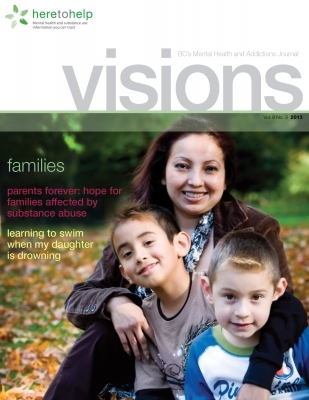
This issue looks at the role and experiences of families, particuarly families of young people, as the majority of mental illness first appears either in childhood, adolescence or young adulthood. It is also during these years that the family's role is most important, and when family support and involvement plays a crucial role in successfully managing the illness.


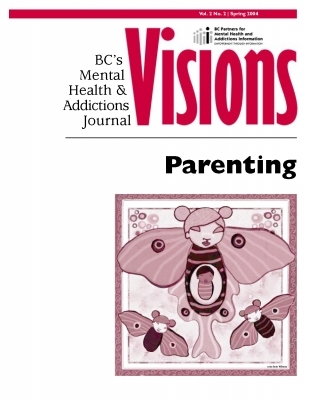
Parenting

Vol. 2, No. 2 (Spring 2004) | 52 pages | table of contents | pdf (1.1 Mb)

Parenting can be one of the most rewarding roles any of us have in life - and this is no different for people with mental disorders. This volume focuses mostly on parents with mental illness from a number of different points of view - the parents themselves, their children, child protection workers, and service providers in the mental health and addictions fields from the adult and child/youth services. The overall theme is one of supporting the whole family, nurturing strengths, and planning ahead for crises.


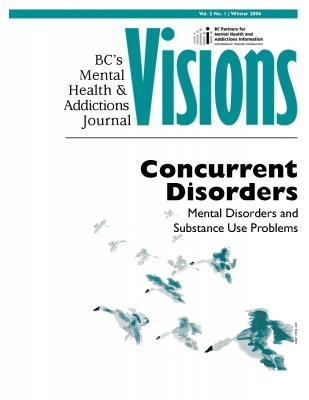
Concurrent Disorders

Vol. 2, No. 1 (Winter 2004) | 60 pages | table of contents | pdf (1.2 Mb)

This issue of Visions - our largest ever, at 60 pages - explores the theme of co-existing mental health and alcohol/drug use problems from a number of different angles and includes personal stories, approaches and models, regional programs in the community, and resources.


Self-Management

Vol. 1, No. 18 (Fall 2003) | 48 pages | table of contents | pdf (1.0 Mb)

Self-management is a term in the clinical community that basically means self-care and empowering individuals and families in managing their conditions. This issue of Visions investigates what the concept means for people with mental illnesses or addictions and includes personal stories of hope and recovery, self-help strategies, community projects and resources.


For Visions issues published prior to #18, please see the Canadian Mental Health Association, BC Division website. Some of these prior topics, produced between 1997 and 2003, include:

  • Supported Education

  • Eating Disorders and Disordered Eating

  • Seniors' Mental Health

  • Anxiety Disorders in Children and Youth

  • Employment

  • Spirituality and Recovery

  • Mood Disorders

  • Housing

  • Cross Cultural Mental Health

  • Sexuality, Intimacy and Relationships

  • Poverty, Unemployment and Income

  • Approaches to Building Mental Health Accountability

  • Community Inclusion

  • What is Mental Health?

  • Women's Mental Health

  • Rehabiliation and Recovery

  • Early Intervention